
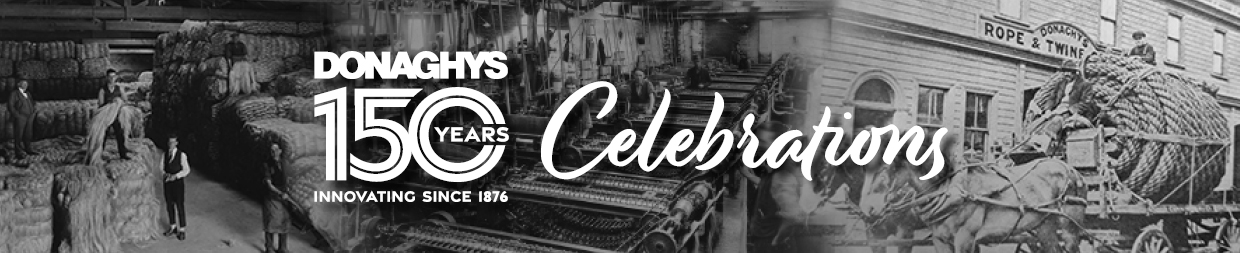
From our humble beginnings in 1876, Donaghys started as a small family-owned rope-works operating out of Dunedin. Today we continue to lead the market in innovative products, on farms, in aquaculture and manufacturing with a team both here in New Zealand and Australia.
Maintaining and growing a successful business for 150 years takes more than passion and dedication alone. It takes innovation and a great team of people behind our products and services to make things happen.
In 2026, we will have traded for 150 years. To celebrate this extraordinary milestone throughout next year, we will be holding a variety of events and celebrations.
This will provide us with the opportunity to honour the vision and hard work of those that have played a critical part in our long and successful history as Donaghys.
To help us celebrate our special birthday, we have created a 150th Anniversary version of our logo.
Throughout next year we will be celebrating with our people, our clients, partners and contacts, reflecting on our achievements but also looking forward to the exciting future we see ahead.
Keep a watch on this page for rolling updates, of our celebrations throughout 2026.
We are Donaghys, proud to be New Zealand owned and operated for (nearly) 150 years.
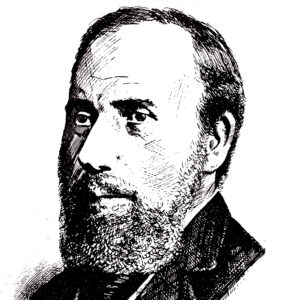
Credit: A New Twist – A Centennial History of Donaghys Industries Limited – by Kathryn G. Lucas. Photo credit: Hocken Collections.
This is our founder John Donaghy (1876) from Geelong, Australia, who established the Dunedin branch of Donaghys Industries Ltd.
John Donaghy had tried life on the Australian goldfields before he joined the family firm. He was an extremely capable businessman and in later years became Mayor of Geelong West and a member of the Legislative Assembly in Australia.
The discovery of gold in Otago brought prosperity to the region, and along with shipping, created a demand for sturdy ropes. With strong trading links between Victoria and Otago; Dunedin served as one of New Zealand’s busiest ports. So, it was no accident that Dunedin was chosen as the location for our business to be established in New Zealand.
In 1878 the Donaghys Rope Works moved to its current location at 63 Bradshaw Street, South Dunedin. The land was purchased for £373 and a further £7,000 was spent on the buildings and plant development.
Builders were sent from Geelong to undertake the build, and the Dunedin branch of Donaghys began with the very latest American patented machinery.
Specifically built (and replaced in 1920), was a 320-meter “rope walk”, which was used to manufacture ropes of significant size and length. This structure was used to lay out and twist together and strands of fibre to create the final rope. Donaghys rope walk, was likely the last of its kind in New Zealand, and is proof of the history and the scale of rope production at the time.
The largest rope ever manufactured in the Southern Hemisphere was made by Donaghys !!
Today the rope walk, is considered a significant piece of New Zealand’s industrial heritage, and its length is a testament to the scale of rope production, according to Heritage New Zealand.
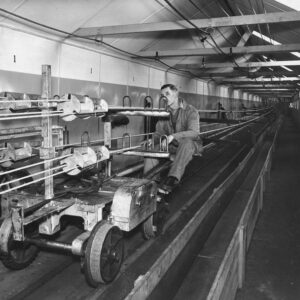
Credit: A New Twist – A Centennial History of Donaghys Industries Limited – by Kathryn G. Lucas. Photo credit: Hocken Collections.
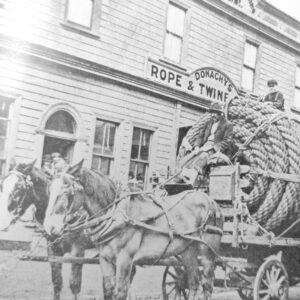
In 1880, Donaghys faced fierce competition, and many ropeworks were being hit by the depression. The Donaghys family decided to sell the business, to William Royse and Alfred Lee Smith, before they returned to Australia.
Keeping in touch with new trends and innovations, was one of the factors which enabled Donaghys not only to survive but to compete so successfully with its many New Zealand rivals.
Benjamin Throp the factory manager was retained in the change of ownership of Donaghys, this allowed the company to proudly exhibit its ware in the Christchurch Exhibition of 1882. The showpiece was the largest rope ever manufactured in the Southern hemisphere – at the time. It was a twelve-strand rope, 235 feet long, and 24 inches in circumference. It took the entire factory staff 10 hours to make. Exhibiting was one of the most effect ways of advertising before print and radio methods were developed.
By 1890 Donaghys Binder Twine had become one of the stable products of the company. It was manufactured from raw materials to the finished article in cotton, jute and hemp. Well-known brands included ‘Eclipse’ and ‘Gold Medal’. By 1890, 525 tonnes of twine was manufactured a year with 700 tonnes expected to be produced in 1891.
In the bustling year of 1884, two ambitious brothers-Joseph and James Passmore-stepped into the world of ropemaking, joining the ranks of Donaghys, a modest but promising enterprise. As they rolled up their sleeves, another figure, Benjamin Throp, charted his own course, leaving to start a rival ropemaking business in Christchurch.
The Passmore brothers weren’t content to simply be employees. With vision and grit, they acquired a one-seventh share in Donaghys. But their influence grew rapidly. Before long, they were no longer just shareholders, they were joint proprietors, in the business as M. Donaghy and Co., a name that would soon echo across New Zealand’s industrial landscape.
M. Donaghy and Co. later joined forces with Lee Smith and Royse, expanding their reach and ambition. The company needed capital to match its momentum, and in October of that year, it transformed into a public company, ready to take on the world.
Opportunity knocked in November 1889, when the New Zealand and South Seas Exhibition opened its doors. Donaghys seized the moment, showcasing their twine to over 600,000 visitors. The results created massive exposure, and a surge of interest from farmers who saw the potential of binder twine. The flax industry, once humble, was now booming.
With demand soaring, Donaghys expanded their South Dunedin factory. New departments for seaming and rope twine were added, and cutting-edge machinery improved both quality and output. Sales soared, and the company’s reputation solidified.
By 1895, Donaghys needed even more space. A new boiler house rose beside the ropewalk, housing two mighty boilers. Towering above the city, the Donaghy’s chimney became a well-known landmark, an industrial beacon that stood tall over Dunedin for generations.
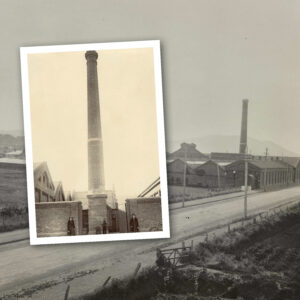
Step back to September 1895, when a bold new chapter was written in New Zealand manufacturing. The formation of Donaghy’s Rope and Twine Co. Ltd. marked the union of Auckland and Invercargill firms with M. Donaghy and Co. Ltd – and under the sharp leadership of James Linster Passmore, the business flourished.
The Stanley Street factory buzzed with activity, employing 45 skilled hands and earning praise in the press as a model of industrial success. By 1899, the company paid its first dividend – a solid 7% – driven by surging demand during the Boer War.
Though the Invercargill works closed in 1906 due to market shifts, the Donaghys name continued to grow, powered by innovation and resilience.
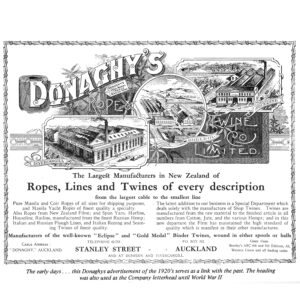
Advertising played a starring role in our journey – from showcasing Italian Plough Lines and “Gold Medal” Binder Twines to premium Yacht Line, our campaigns reflected the spirit of the times and the pride in our products.
Here’s a glimpse into the early days of Donaghy’s Rope and Twine Co. advertising – where heritage met hard work, and every ad told a story.
From the challenges of World War I to the economic rollercoaster of the 1920s and beyond, Donaghys stood strong — evolving alongside New Zealand’s farming industry for over five decades.
In the 1880s, cropping ruled the land, and the arrival of the mechanical reaper and binder revolutionised harvests. Suddenly, twine was in high demand, and Donaghys was ready. Binder twine became a staple, and skilled ropemakers, masters of their craft, were the backbone of production.
Whale oil once filled the air as it was used to lubricate raw rope fibre, until mineral oil took its place. Fires were a constant risk, with flammable fibres and busy factories – but innovation never stopped.
By 1921, electricity powered the Dunedin factory, and by 1926, the iconic chimney at the factory in Stanley Street, Auckland had come down, marking a bold new chapter of modernisation, revolutionising production and setting the stage for industrial growth.
From hand-twisted rope to electrified efficiency, Donaghys has always been evolving through the ages, driven by resilience, innovation, and a deep connection to New Zealand’s farming heritage.
As farming practices advanced, so did Donaghys, from supplying binder twine during the reaper-binder boom to developing patented nitrogen technologies that support modern pasture systems. Whale oil gave way to mineral lubricants, manual labour to mechanised precision, and local workshops to highly productive manufacturing facilities.
Today, Donaghys continues to lead with science-backed solutions, sustainable practices, and a commitment to supporting farmers with products that reflect 150 years of progress, and a future built on innovation.
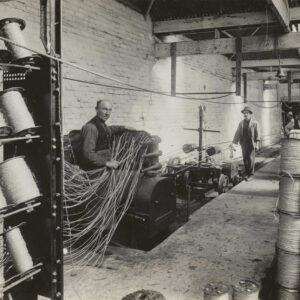
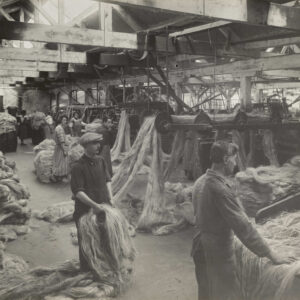
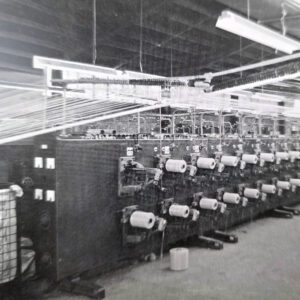
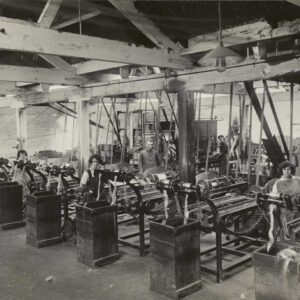
The Second World War threw Donaghys into territory they’d never navigated before, but it also made them critical players in the Allied war effort. Workers left for military service, materials became scarce, yet somehow the company managed to increase production by 300% by 1943. The Japanese occupation of the Pacific cut off vital fibre supplies from the Philippines, which forced the company to pivot to local New Zealand flax production. Sixty per cent of everything they made went straight to US and New Zealand forces.
The South Dunedin factory kept running day and night under Jack Passmore’s leadership. He fundamentally changed how they manufactured rope, shifting away from traditional methods towards more efficient automated processes.
The factory ran around the clock. Nearby residents put up with the constant noise, viewing it as their own contribution to the war effort. Women joined the workforce in unprecedented numbers, particularly in Dunedin where few had worked in factories before.
This wasn’t simply about doing their bit for the war effort. It marked a genuine turning point in how Donaghys operated—one that shaped the company’s approach to manufacturing for decades afterwards.
Perhaps the most significant change was the shift from traditional ropemaking as a cherished art to a standardised skill. Automation met resistance from old-timers, but it ultimately prevailed and changed the industry forever.
As we celebrate 150 years of Donaghys, we’re looking back at the moments that shaped who we are — and one of the biggest turning points came in 1943, when we officially established our Research and Development team.
At a time when the world was changing fast, Donaghys recognised something vital: To stay ahead, you must keep innovating.
During the war years, New Zealand industries were pushed to evolve, and Donaghys stepped up. Our new Research and Development team, began testing new manufacturing techniques, strengthening quality control, and exploring technologies from around the world. (Photo: Weaving tape extruders in the Dunedin factory.)
Regular overseas visits, close collaboration with Australian rope makers, and a commitment to learning, meant Donaghys was often preparing for industry changes years before they reached New Zealand.
This forward-thinking mindset helped us, solve complex challenges with original, home-grown solutions, stay at the forefront of rope and twine manufacturing, keep production moving through wartime labour shortages and build a culture of resilience, loyalty, and ingenuity.
From the Auckland factory floor to the Waikuku twine plant, innovation wasn’t just a department — it was a team effort, built with drive. It was the spirit of workers who showed up, adapted, and pushed boundaries, even in the toughest times.
Today, that same drive fuels our team, the workers in our factory, our team on the road, behind the desks in our office and in our customer call centre. Today, we continue developing smarter, stronger, more sustainable solutions for Kiwi farmers and industries across the globe. Our commitment isn’t seasonal, it’s generational.
Few New Zealand companies have traded continuously for over 150 years. Donaghys is still Kiwi owned, still innovating, and still supporting farmers and industries across New Zealand and beyond.
At Donaghys, innovation built our past — and it’s shaping our future also. Here’s to 150 years of progress, and many more to come.
When the war ended, Donaghys faced a completely new world. The markets had changed, technology had leapt forward, and rope making itself was no longer the same game. Wartime research had opened the door to two major breakthroughs – electronics and the petrochemical industry and from that came something that would reshape our future: synthetic fibres.
Through the late 1940s and 1950s, Donaghys embraced this challenge with determination and curiosity. Our teams travelled the world, studied new fibre technologies, and re-engineered machinery to spin and twist manmade materials. Synthetic ropes were stronger, lasted longer, and opened up entirely new possibilities.
At home, New Zealand was booming. Returning servicemen, new industries, and a hungry domestic market meant Donaghys had to supply rope and cordage to almost every sector in the country. By the late 1950s, we were producing both natural and synthetic fibre products and nearly every industry used at least one Donaghys line.
This era also saw the rise of baler twine, which became one of our most important products. Major upgrades to manufacturing plants were also undertaken to meet growing demands.
New markets emerging in fishing, boating, and the Pacific for trade and there was a shift from traditional rope making to a more innovative, and diversified approach.
It wasn’t always easy, labour shortages, supply challenges, and shifting markets kept everyone on their toes – but Donaghys adapted, evolved, and kept moving forward.
By the end of the 1950s, we had come through a decade of massive change we were ready for new technologies and new markets and more importantly, ready for a future built on innovation. It is this spirit still drives us today.
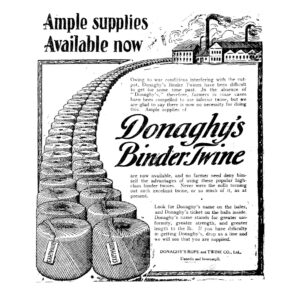
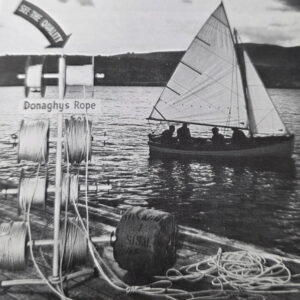
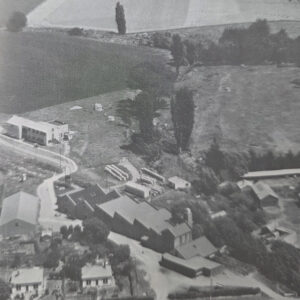
Credit: A New Twist – A Centennial History of Donaghys Industries Limited – by Kathryn G. Lucas. Photo credit: Donaghys – Waikuku factory and examples of our early Synthetic cordage for boating, yachting and watersports.
The 1960s were a decade of massive change for Donaghys – a time when synthetic fibres took off, new technologies emerged, and the company began exploring bold new directions.
Across our sites, production was booming. New machinery, expanded storage, and even carpet yarn manufacturing was added to the mix – all built on the skills and expertise our teams already had. It was a time of big ideas, new products, and forward thinking investment.
But growth didn’t come without challenges. Import restrictions, global fibre shortages, political upheaval in supplier countries, and rising costs meant Donaghys had to stay sharp, adaptable, and always one step ahead. Thanks to smart planning and strong leadership, the company navigated every twist and turn.
Behind the scenes, a new generation of leaders and long serving staff shaped the company’s culture – from the legendary Waikuku factory families to the innovators driving synthetic fibre development. Their loyalty, skill, and determination helped Donaghys evolve from a rope maker into a modern industrial business ready for the future.
This era marked the beginning of something bigger. A commitment to diversification. A drive for innovation and a belief that Donaghys could grow far beyond its origins. And that spirit still defines us today.
As we celebrate 150 years of Donaghys, we’re proud to look back on the moments that shaped our connection with the New Zealand’s farming community – including our long-standing commitment to agricultural education, support, and sponsorship.
In 1967, Donaghys took a meaningful step by funding a scholarship for the newly established Telford Farm Training Institute. At the time, Telford was a bold new idea – a hands-on training ground designed to bridge the gap between school and the specialised agricultural studies offered at Lincoln and Massey.
With only 30 students in its early days and relying entirely on private support, Telford needed champions. Donaghys stepped in, offering a three-year scholarship and, with Qantas, an incredible prize: a world tour with arranged employment to help the winning student broaden their experience in agriculture.
The scholarship quickly became a major drawcard, helping Telford grow, gain recognition, and eventually secure government support. Even after the initial sponsorship period ended, Donaghys continued to back the institute – awarding an annual prize to the top student and staying closely connected to the future of farming.
Over the decades, our support has extended to, Young Farmers Clubs, Bale-sacking competitions, dog trials, local agricultural groups and a wide range of community organisations and charities across New Zealand.
Supporting farmers isn’t just part of our history – it’s part of who we are, our commitment isn’t seasonal, it’s generational and we’re proud to continue activities today that enrich the lives of people in our community and the future farmers of New Zealand.
The 1960s were a decade of massive change for New Zealand – and Donaghys was right in the thick of it. As the country prepared to switch to decimal currency and adopt the metric system, businesses everywhere had to rethink how they operated.
For Donaghys, this shift wasn’t just about new numbers – it was about adapting to a changing world and preparing for global growth.
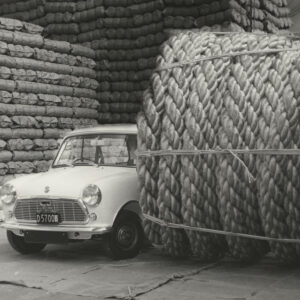
July 10, 1967 marked a milestone: Shareholders saw the company’s accounts presented in both sterling and decimal for the first time, with Donaghys now standing proudly as an export focused enterprise. But going metric brought unique challenges, especially in the rope industry. Traditionally wire ropes were measured by diameter and fibre ropes were measured by circumference.
Under the new metric system, everything had to be sold by diameter. Cue confusion, recalculations, and a whole lot of customer education.
New Zealand even went metric before the United Kingdom and the United States, which meant Donaghys had to bridge two measurement worlds, for a while.
But there was a silver lining. Trading with Asia became easier, as metric measurements were already standard across many markets.
With time, experience, and a whole lot of perseverance, Donaghys navigated the transition, proving once again that adaptability has always been one of our greatest strengths.
We’d love to hear and see your memories of Donaghys, over the years. Drop us a line to [email protected] as we start to celebrate our 150-year rich history.
We are Donaghys, proud to be New Zealand owned and operated for 150-years.
Thank you for being part of our journey!
